As the world gathers at COP to accelerate the clean energy transition, a truth stands out clearly: renewable generation alone is not enough. To achieve net zero and build resilient energy systems, renewables, alongside modern and responsive grid and transmission infrastructure, must be coupled with large-scale storage that ensures reliability, flexibility and stability.
Battery Energy Storage Systems (BESS) are fast emerging as the defining technology of this decade. They make renewable power dependable by storing excess energy and dispatching it when the grid needs it most. For Scatec, this is not theory but proven practice.
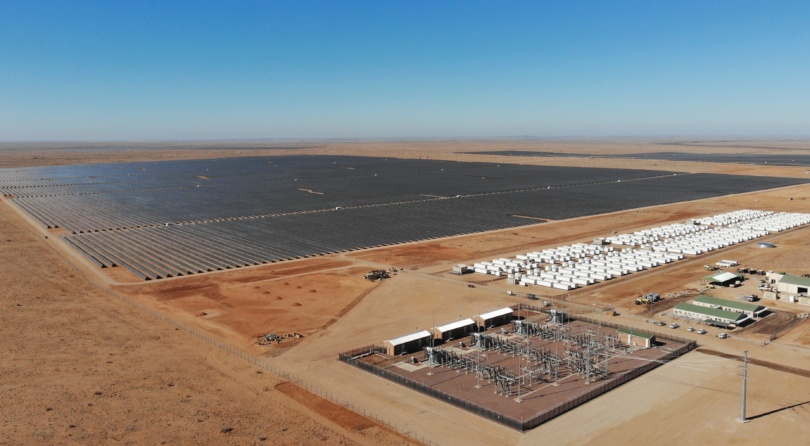
In South Africa, Scatec has delivered one of the world’s largest hybrid solar and battery plants at Kenhardt. The facility combines 540 megawatts of solar capacity with a 225 megawatt, 1,140 megawatt-hour battery system. It delivers a consistent 150 megawatts of power to the national utility every day under a 20 year agreement. This makes it one of the first renewable projects in Africa able to provide fully dispatchable power at utility scale. Kenhardt has since been recognised as a finalist in the SB COP Case Awards, highlighting its role as a global model for sustainable design and grid resilience.
Building on that success, Scatec is developing two further battery projects in South Africa: Mogobe BESS, rated at 103 megawatts and 412 megawatt-hours, and the recently awarded Haru project, with 123 megawatts and 492 megawatt-hours. Together, these mark the evolution from hybrid solar-battery systems to fully independent storage assets that can stabilise national grids, manage peak demand, and support the integration of new renewable generation.
Scatec’s experience now extends across continents. In Egypt, the company is developing multiple renewable-plus-storage projects; in the Philippines, the company is integrating BESS into hydro power stations through a joint venture with Aboitiz Power. These systems enhance the flexibility and reliability of renewable generation while expanding Scatec’s expertise in dispatchable clean energy.
For markets such as Brazil, the implications are significant. The country has vast renewable potential, but intermittency and grid stability remain persistent challenges. Scatec’s portfolio demonstrates how BESS can unlock this potential by turning variable energy into firm capacity, strengthening transmission systems and supporting industrial growth.
At COP, Scatec will bring this experience to the global stage. Its message is direct: the clean energy transition will not succeed without large-scale storage. Batteries are no longer a niche technology; they are the backbone of a modern, resilient power system. Through projects in Africa, Asia and beyond, Scatec is proving what the next phase of energy transition looks like in practice.