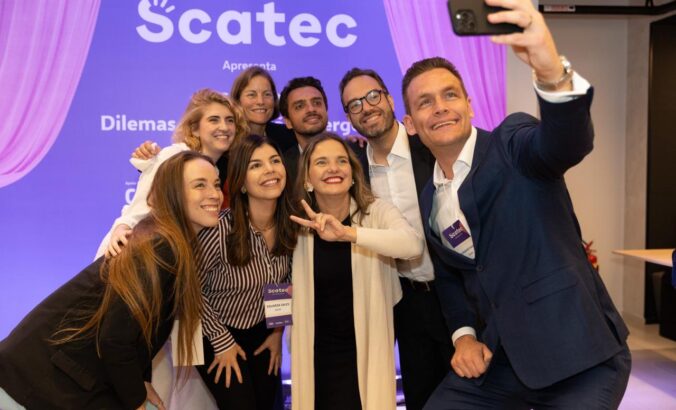
Reflections from a theater-inspired morning during COP30 in Brazil
Earlier this week in São Paulo, a group of leaders, industry experts, and thinkers came together for a unique morning of reflection on the dilemmas of the global energy transition. Rather than follow the familiar panel format, the session adopted a Greek theater–inspired approach: every participant became an active interpreter of the theme, engaging in dialogue, questioning assumptions, and helping to co-create the narrative.
The timing and location made the gathering especially meaningful. With COP30 taking place in Brazil, the conversation served as a reminder that the transition ahead is not a single voice speaking, it is a story written collectively, through shared responsibility and diverse perspectives.
Programme Highlights
08:30 — Welcome Coffee & Networking
Participants connected informally to set the tone for an open and collaborative conversation.
09:00 — Opening Remarks
Raquel Araujo, MSc, Scatec
Araujo introduced the purpose of the session, inviting everyone to step into the role of both observer and protagonist in the energy transition narrative.
09:10 — The Dilemmas of the Energy Transition
The central dialogue featured contributions from:
- Ann-Mari Lillejord, EVP LATAM & Europe, Scatec
- Elbia Gannoum, Brazilian Special Envoy for the Energy Sector, COP30
- Juliana Schurmann, CEO, Impact Coalition
- Julio Meirelles, Executive Director, Santander Brasil
- Rafaela Guedes, Senior Fellow, Energy Transition Programme, CEBRI
Moderation by Pedro Lins, Professor at Fundação Dom Cabral.
Together, the group explored the practical, political, social, and ethical challenges of shifting global energy systems, highlighting tensions that require not only technology and investment, but also empathy, dialogue, and shared accountability.
A shared story still being written
As Brazil hosts COP30, the gathering underscored a fundamental message: the energy transition is not a monologue. It is a collective play in which every actor has a role. The decisions made now, across sectors, borders, and communities, will shape the narrative inherited by future generations.
Looking forward
The morning concluded with appreciation for the openness and courage that participants brought into the shared space. The dialogue continues, rooted in the understanding that the transition is both urgent and collaborative.
Thank you to everyone who contributed their voice. The script is still being written and we write it together.